

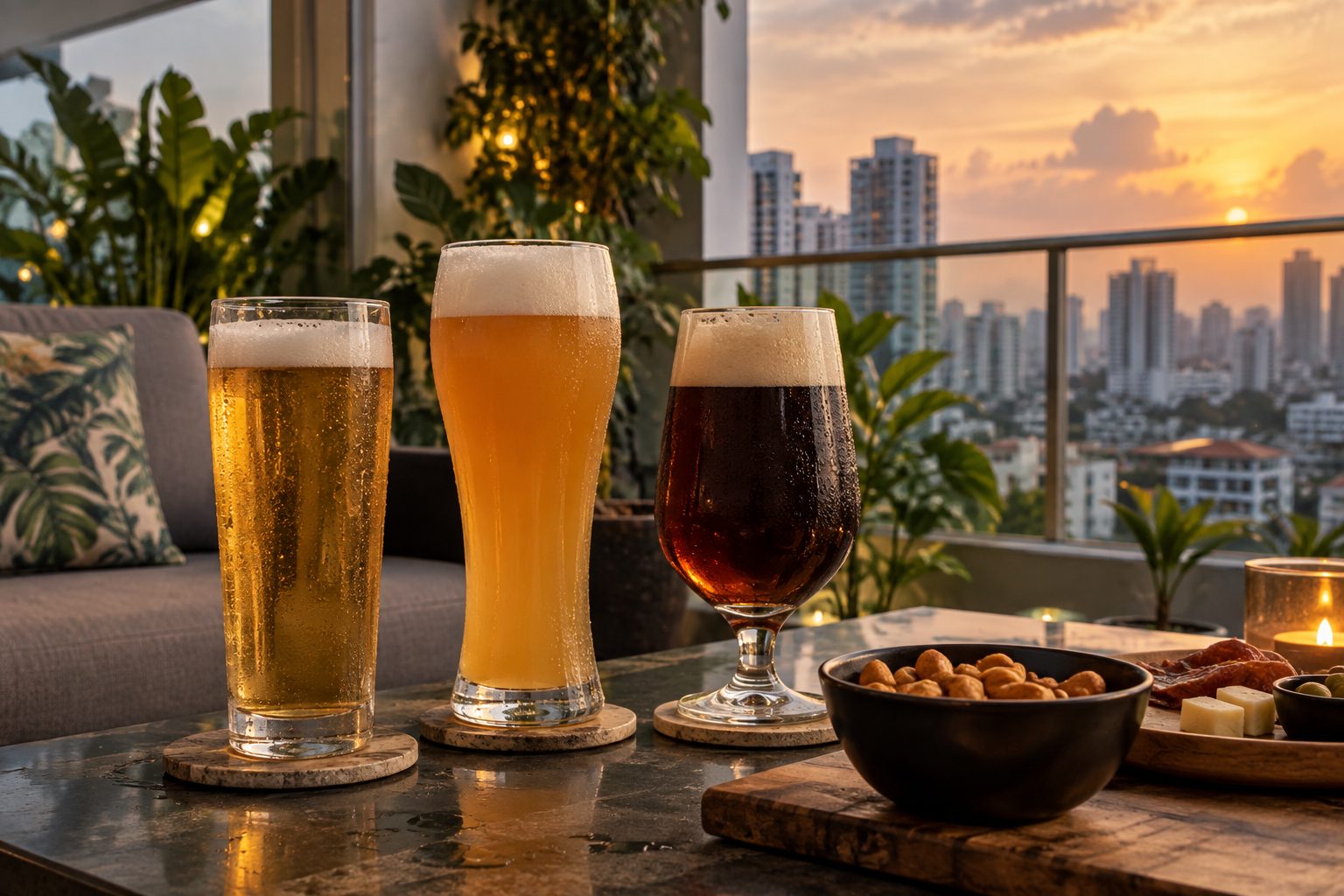
If you have ever looked at a German beer shelf and thought, “I recognise all the letters, but I still don’t know what I’m buying,” this is for you.
Three names come up again and again: Helles, Weissbier and Dunkel. They sound like categories you are meant to already understand, but the differences are actually quite easy once you stop reading them like an exam question.
The simplest way to choose is to think about the moment. Did you just come home hot and tired? Are you sitting down to dinner? Or has dinner ended and the night slowed down? That is more useful than memorising tasting wheels.
Helles: when you just want a cold beer.
If the evening begins with “wah, today damn hot”, start here. Helles is a pale German lager style. The appeal is balance: clean, crisp and refreshing, with enough malt character to avoid tasting like cold fizzy water. It is the style we would choose when refreshment matters more than analysis.
Paulaner Münchner Hell is an easy Beeva example. Put it beside pizza, fried chicken, burgers, grilled prawns, chicken wings or the snacks that appear halfway through a football match. It does not ask you to change the food around it.
It is also a good fridge beer when you have friends coming over and do not know exactly what everyone likes. Among these three styles, Helles is usually the least risky crowd-pleaser.
Choose Helles when: it is hot, the food is casual, or you just want the first beer to disappear easily.
Weissbier: when you want something softer and more flavourful.
“Weissbier” is wheat beer. Compared with a straightforward lager, it normally feels rounder and fuller. You may notice fruity or lightly spicy aromas, but you do not need to identify banana, clove or anything else before you are “allowed” to enjoy it.
Paulaner Weissbier and Erdinger Weissbier are both useful starting points. They work especially well when you are actually sitting down to eat: roast chicken, sausages, pork, seafood, richer grilled dishes, creamy sauces and anything with a bit more weight than a bowl of chips.
One small tip: pour it into a glass if you can. A proper wheat beer has a lively foam and aroma, and both are part of why it feels different from a standard lager. Do not panic if the head is generous - that is not the beer misbehaving.
Choose Weissbier when: dinner is on the table and you want more flavour without moving into anything heavy.
Dunkel: when the evening slows down.
“Dunkel” simply points you toward something darker. Dark beer sometimes gets treated as if it must automatically be bitter, heavy or extremely strong. That is not what Dunkel is about.
The style tends to bring more malt, toast and caramel-like depth. It can still be very drinkable, but it feels more suited to a slower glass than something you crack open after walking home from the MRT.
Paulaner Dunkel and Erdinger Dunkel are worth trying if your usual move is to skip anything dark. Pair them with roast meats, sausages, grilled mushrooms, richer burgers or even chocolate-based dessert if you want to experiment.
Choose Dunkel when: the food is richer, the pace is slower, or you want something malty without jumping straight to whisky.
The Beeva fridge test.
Still cannot decide? Imagine opening the fridge tonight. You have just come home, the humidity followed you upstairs, and you want something cold before dinner: Helles. You are sitting down with proper food and want the beer to be part of the meal: Weissbier. Dinner is finished, the lights are lower, and nobody is rushing anywhere: Dunkel.
That is obviously not a law. If you like Dunkel beside a plate of fried chicken at 3pm, please continue. The point is simply to give yourself a useful starting point.
Good taste should not feel like homework.
There is a tendency around wine, whisky and beer to make enjoyment sound like a test: identify the aroma, name the region, use the right vocabulary. But for most of us, the useful question is much simpler: does this fit the food, the weather and the mood? If it does, you picked well.
Try the three styles side by side sometime. Not as a formal tasting. Just three bottles, a few friends, something salty on the table and enough time to notice which glass you keep going back to.

![Paulaner Dunkel CAN 24 x 500ml [BBD: 24 Sep 2026]](https://beeva.com.sg/wp-content/uploads/2025/01/B010152C-PAULANER-DUNKEL-CAN-24500ML5.3-300x300.png)
![ERDINGER WEISSBER QUART 12 x 500ml [BBD: 01 SEP 2026]](https://beeva.com.sg/wp-content/uploads/2025/01/B010027C-Erdinger-Weissbier-Bottle-12x500ml-300x300.png)
![Paulaner Münchner Hell Can 24 x 500ML [BBD: 01 Sep 2026]](https://beeva.com.sg/wp-content/uploads/2025/01/B010150C-PAULANER-MUNCHNER-HELL-CAN-24500ML4.9-300x300.png)
![Paulaner Weissbier CAN 24 x 500ml [BBD: 29 Jul 2026]](https://beeva.com.sg/wp-content/uploads/2025/01/B010153C-PAULANER-WEISSBIER-CAN-24500ML5.3-1-300x300.png)
![ERDINGER DUNKEL QUART 12 x 500ML [BBD: 01 SEP 2026]](https://beeva.com.sg/wp-content/uploads/2025/01/B010028C-Erdinger-Dunkel-Bottle-12x500ml-300x300.png)